Fernando Alcoforado*
This article presents Chapter 2 (Sustainability in Flood Management), prepared by Fernando Alcoforado, of the Flood Handbook- Impacts and Management**, prepared under the coordination of Professors Saeid Eslamian and Faezeh Eslamian and published by CRC PRESS. Chapter 2 of the Flood Handbook- Impacts and Management aims to present the necessary measures to control and manage floods and how to achieve sustainability in flood management. The methodology used consisted mainly of analyzing the existing literature to characterize the causes and consequences of floods, the measures to control floods, the flood protection measures used in Europe, North America and Asia, the measures put in place for the safety of post-flood cleanup, the benefits resulting from the floods, and the proposed measures to deal with future floods. Also analyzed was the secular experience of the Netherlands, which is the most advanced country in the world in the prevention and control of floods, and its actions in facing the consequences of global warming. Finally, what should be done to achieve sustainability in flood management was outlined.
CONTENTS
1 Introduction
2 Flood Control and Its Management in the World
2.1 Causes and Consequences of Floods
2.2 Flood Control
2.3 Flood Protection in Europe, North America, and Asia
2.4 Measures Adopted for Post-Flood Cleaning Safety
2.5 Benefits from Floods
2.6 Confronting Floods in the Future
3 Netherlands Experiences in Flood Prevention and Control
4 The Netherlands and Global Warming
5 Sustainability in Flood Management
6 Summary and Conclusions
References
1 INTRODUCTION
This chapter aims to present the necessary measures to control and manage floods and outlines ways to achieve sustainability in flood management. This study is of great importance in the contemporary era as the prospect of worsening floods – as a result of global climate change – begins to cause heavy rains in cities and countryside. The methodology used consists mainly of analyzing the existing literature to characterize the causes and consequences of floods, measures to control floods, flood protection measures used in Europe, North America, and Asia, the measures put in place for the safety of post-flood clean-up, benefits resulting from flooding and proposed measures to cope with future floods. The secular experience of the Netherlands was also analyzed. The Netherlands is the world’s most advanced country in terms of flood prevention and control, and its plans for coping with the consequences of global warming. Finally, the chapter outlines what has to be done to achieve sustainability in flood management.
2 FLOOD CONTROL AND ITS MANAGEMENT IN THE WORLD
In this section there will be a discussion about the causes and consequences of floods, flood control measures, flood protection measures in Europe, North America, and Asia, post-flood cleanup measures, flood benefits and proposed measures to cope with future floods.
2.1 Causes and Consequences of Floods
Flooding is caused by many factors including intense rainfall, strong winds over water, unusual high tides, tsunamis or failure of dams, elevation of retention pond levels or other structures that contain water. Periodic flooding occurs in many rivers, forming a surrounding region known as an alluvial plain. During periods of rain or snow, some of the water is retained in ponds or soil, others are absorbed by grass and vegetation, some evaporate and the rest travels over the land as surface runoff.
Flooding occurs when lakes, riverbeds, soil and vegetation cannot absorb all of the water. Water then escapes from land in quantities that cannot be transported into the channels of streams or retained in natural ponds, lakes, and man-made reservoirs. About 30% of all rainfall is in the form of small runoff – an amount can be increased by the water from any melted snow where it exists. River flooding is usually caused by heavy rains, and is sometimes also increased by snow melting. Rapid flooding, with little or no advance warning, is called a sudden flood. Sudden floods usually result from heavy rains in a relatively small area, or if the area was already saturated with previous precipitation.
Severe winds over water are another cause of flooding. Even when the rain is relatively light, the banks of lakes and bays can be flooded as a result of strong winds such as during hurricanes that blow water to the coastal areas. Another cause are unusual high tides that occur, sometimes in coastal areas which see flooding by these unusually high tides, especially when composed of strong winds and storms.
Flooding causes many impacts. It damages property and endangers the lives of humans and other living things. Rapid water runoff causes soil erosion and concomitant deposition of sediment at various locations. Fish spawning sites and other wildlife habitats may become polluted or completely destroyed. Some high and prolonged floods can compromise vehicle traffic in areas that do not have elevated roads. Flooding can interfere with drainage and economic land use, such as interfering with agriculture. Structural damage can occur in bridge pillars, sewage systems and other structures in the area of floods. Water navigation and hydroelectric power are often hampered. Financial losses due to floods are typically millions of dollars each year.
2.2 Flood Control
Flood control refers to all methods used to reduce or prevent the damaging effects of flood waters. Some of the common techniques used for flood control are the installation of rock berms, rock rip-raps, sandbags, maintenance of normal slopes with vegetation or application of soil cements on steeper slopes, and construction or expansion of drainage. Other methods include dykes, dams, retention basins, or detention. Following the 2005 Hurricane Katrina disaster in the United States, some areas prefer not to use dykes as flood controls; communities may prefer to improve drainage structures with detention basins.
Some methods of flood control have been practiced since antiquity. These methods include planting vegetation to retain excess water, slopes of terrace to reduce slope flow, building alluviums (man-made channels to divert water from flooding), and the construction of dykes, dams, reservoirs or holding tanks to store extra water during flood periods.
In many countries, flood-prone rivers are often carefully managed. Defenses such as dykes, reservoirs and dams are used to keep rivers from overflowing. A dam is one method of flood protection that reduces the risk of flooding compared to other methods. It can help prevent damage. However, it is best to combine dykes with other flood control methods to reduce the risk of a collapsed embankment. When these defenses fail, emergency measures such as sandbags or portable inflatable tubes are used. Coastal floods have been controlled in Europe and North America with defenses such as ocean walls or barrier islands that are narrow, long strips of sand usually parallel to the coastline.
The engineering works that can prevent and mitigate the effects of floods are as follows: 1) on highways, the implantation of steel pipes should take water by gravity away from the road from catchment basins; 2) the severe flooding problems in a city that paved much of its soil would be alleviated in part by the construction of great swimming pools that are large underground water tanks to store the waters; 3) mandatory placement of permeable drainage floors in the huge courtyards of parking lots of malls, supermarkets and cinemas to allow the infiltration of water in part of the ground, being the same for monuments and spaces around buildings; 4) use of drains and gutters around all houses to divert rainwater to a reservoir or disposal area; 5) maintenance, whenever possible, of some green areas so that the water is reabsorbed by the soil; 6) rectification of rivers and streams, construction of dams and canals in large rivers that extend their containment basins; and 7) implementation of a civil defense system that should be able to at least warn people and have a scheme to remove them from homes in time with some belongings and accommodate them.
Preventative care to avoid flooding in urban areas includes: 1) keeping streets and sidewalks always clean; 2) cleaning and unclogging manholes and storm drains; 3) keeping housing channels and other channels of rainfall clear from branches and leaves of trees to avoid clogging and, consequently, return of water; 4) putting garbage bags on the sidewalks only near the time of collection, preventing them from being drawn into a manhole when it rains; 5) having a drain pump on hand if flooding cannot be avoided; and 6) using Dutch and British flood proof technologies such as a floating amphibian houses that allow buildings to float in the same way as a boat.
Hydrological experts recommend that, in order to avoid flooding in urban areas, the following measures should be adopted: 1) combating erosion by minimizing sedimentation of natural drainage and built up through rigorous and extensive soil erosion control, irregular urban garbage and construction rubble, as well as the expansion of the river gutters; 2) combating waterproofing with the creation of domestic and business reservoirs, as well as the expansion of green areas; 3) prohibition of traffic on high traffic avenues when nearby rivers overflow; 4) implantation of avenues covered by vegetation that, in cases of overflowing rivers or streams, water would be absorbed by the pavement free soil; 5) construction of great swimming pools to receive rainwater and mini swimming pools in houses and buildings; 6) invest in the small and large streams of the urban center to support the increase of water and act as barriers of containment; 7) reviewing occupied areas – continuous planning and land-use planning; and 8) action and planning – preparation of a plan to deal with the occurrence of floods as well as extreme climatic variations and the construction of reservoirs capable of storing billions of cubic meters of water and its use for non-potable purposes.
Correction and prevention measures to minimize flood damage are classified according to their nature into structural measures and non-structural measures. The structural measures correspond to the works that can be implemented aiming at the correction and / or prevention of problems arising from floods. Non-structural measures are those that seek to prevent or reduce the damage or consequences of floods, not by means of works, but by the introduction of norms, regulations, and programs that aim at, for example, disciplining land use and occupation, the implementation of warning systems and the awareness of the population.
The structural measures comprise the engineering works, which can be characterized as intensive and extensive measures. Intensive measures, according to their purpose, can be of four types [1]:
- Acceleration of outflow: pipeline and related works;
- Flow retardation: reservoirs (detention / retention basins), restoration of natural gutters;
- Flow deviation: tunnels of derivation and channels of deviation;
- Individual actions to make buildings flood proof.
On the other hand, the extensive measures correspond to small storage in the basin, restoration of vegetation cover and soil erosion control along the drainage basin.
Structural measures can create a sense of false security and even induce the expansion of occupation of flood areas. Non-structural actions can be effective at lower costs and for longer horizons. Non-structural actions seek to discipline territorial occupation, people’s behavior and economic activities.
Non-structural measures may be grouped as follows [1]:
- Actions to regulate land use and occupation;
- Environmental education focused on the control of diffuse pollution, erosion and waste;
- Insurance-flood;
- Flood warning and forecasting systems.
By delimiting areas subject to flooding depending on the risk, it is possible to establish a zoning and the respective regulations for the construction, or for possible individual protection works (such as the installation of floodgates, watertight doors and others) to be included in existing buildings. In the same way, some areas can be expropriated to be used as squares, parks, parking lots and other uses.
In certain cases where structural measures are technically or economically unviable, or even untimely, non-structural measures, such as warning systems, can reduce the expected damage in the short term with small investments.
2.3 Flood Protection in Europe, North America, and Asia
London is protected from flooding by an immense mechanical barrier on the River Thames, which is lifted when the water level reaches a certain height. Venice has a similar arrangement, although it is already unable to handle its very high tides. The defenses of London and Venice will be considered inadequate if the level of the sea continues to rise. The largest and most elaborate flood defenses can be found in the Netherlands, where they are referred to as Delta Works with the Oosterschelde dam being their greatest achievement. These works were built in response to the 1953 North Sea flood in the southwestern part of the Netherlands. The Dutch had already built one of the largest dams in the world in the north of the country, the Afsluitdijk (which closed in 1932). The St. Petersburg Flood Prevention Facilities Complex was built in Russia to protect St. Petersburg from storms. It also has a main traffic function as it completes a circular road around St. Petersburg. Eleven dams stretch 25.4 kilometers and are eight meters above water level [2].
Another elaborate system of flood defenses can be found in the province of Manitoba in Canada. The Red River flows north from the United States, through the city of Winnipeg (where it meets the Assiniboine River) towards Lake Winnipeg. As is the case with all rivers running north in the temperate zone of the Northern Hemisphere, thawing in the southern sections can cause river levels to rise before the northern sections have a chance to thaw completely. This can lead to devastating floods, as occurred in Winnipeg during the spring of 1950 [2]. To protect the city from future floods, the Manitoba government undertook the construction of a huge levee system. The system kept Winnipeg safe during the 1997 flood which devastated many communities north of Winnipeg, including Grand Forks, North Dakota and Ste. Agathe, Manitoba [2].
In the United States, the New Orleans Metropolitan Area, 35% of which is below sea level, is protected by hundreds of miles of levees and floodgates. This system failed catastrophically, with numerous breaks during Hurricane Katrina in the city proper and in the eastern sections of the metropolitan area, resulting in the flooding of approximately 50% of the metropolitan area, ranging from a few centimeters to twenty feet in coastal communities. In a flood prevention act, the United States government offered to buy flood-prone properties in order to prevent repeated post-flood disasters in 1993 throughout the Midwest. Several communities accepted this proposal and the government, in partnership with the state, bought 25,000 properties that they converted into wetlands. These wetlands act like a sponge in storms, and in 1995, when the floods returned, the government did not need to allocate resources in those areas [2].
In China, deviation areas are rural areas deliberately flooded in emergencies to protect cities. With natural forest cover, the duration of floods should decrease. Deforestation amplifies the incidents and severity of floods [2].
2.4 Measures Adopted for Post-Flood Cleaning Safety
Clean-up activities after floods often pose risks to the workers and volunteers involved in the effort. Potential hazards include electrical hazards, carbon monoxide exposure, musculoskeletal hazards, heat or cold, hazards related to motor vehicles, fire, drowning, and exposure to hazardous materials. As flooded disaster sites are unstable, cleaners may encounter sharp fragments, biological hazards in the water, exposed electrical lines, blood or other body fluids, and animal and human remains. When planning and responding to flood disasters, managers should provide workers with safety helmets, goggles, heavy duty gloves, lifejackets, and waterproof boots to toes and with steel insoles.
2.5 Benefits from Floods
It should be noted that flooding can bring benefits too, such as making soil more fertile and providing nutrients in which it is deficient. Periodic flooding was essential for the well-being of ancient communities along the Tigris and Euphrates rivers, the Nile River, the Indus River, the Ganges River, and the Yellow River, among others. The viability of renewable sources of hydrological-based energy is greatest in flood-prone regions.
2.6 Confronting Floods in the Future
Europe is at the forefront of flood control technology. With many countries across Europe at or below sea level, the problems of flooding and rising sea levels are increasing. Countries such as the Netherlands, with projects such as the Zuiderzee works and the Delta Works, can be important models for the other countries in the world. These types of gigantic projects can be instrumental in combating the increasing effects of global climate change, such as rising sea levels, increasing the frequency and severity of some natural disasters, and even increasing the duration of dry or rainy seasons [3].
The sheer amount of damage that Hurricane Katrina caused to New Orleans could have been avoided if New Orleans had a flood control system like that of the Netherlands [2]. The impact of Katrina prompted the state of Louisiana to send politicians to the Netherlands to tour the complex and highly developed flood control system. Many countries around the world are also at or below sea level and, worse still, is the fact that a significant amount of the global population lives on or near the coast. Even if many of these projects around the world are designed to combat flooding from 100 or even 10,000 years ago, these projects can still be key instruments in the fight against global climate change [1].
The Netherlands, which is the world leader in flood control and the struggle against the sea for centuries, develops new procedures to deal with water that are constantly being developed and tested [4]. Projects such as the underground storage of water, storage of water in reservoirs in large parking garages, and even something simple like turning a playground under normal conditions into a small lake during a heavy rainy season show how the Netherlands is actively trying to counter the dangers of rising sea levels. In Rotterdam, there is even a project to build a 120-acre floating housing complex, which obviously will not be affected by rising sea levels.
These flood control systems do not always have to be adopted exclusively to prevent flooding, they can also be used to fight against droughts. China recently visited the Netherlands and asked for its help in combating the large-scale drought that is occurring there. The Dutch will help China develop a drought alert system, as well as new water resources management programs and contribute to flood defense research [2]. Flood control will become a growing issue in world politics and, as more and more countries begin to feel the effects of a global rise in sea level, the Netherlands will certainly be at the forefront of this action, considered as an example by many countries when it comes to deal with rising sea levels.
3 NETHERLANDS EXPERIENCES IN FLOOD PREVENTION AND CONTROL
The government of the Netherlands invests heavily in the maintenance of dykes and canals, in the control of waters and in the fight against musk rats, a serious threat to the advanced net of protection against Dutch storms, by weakening the dams with the deep nests that they dig for protect their offspring. Using metal cages and carrot traps, the Flevoland rodent hunters perform a simple but vital service for the efficient Dutch defense system, composed of flood control techniques developed since the Middle Ages and by futuristic steel structures operated by computers, which move to control flooding caused by rising water levels after storms [4].
Dutch thinking is about avoiding the occurrence of catastrophes. The Netherlands has no hurricanes, but faces fierce storms from the northwest, routed to the Dutch coast through the North Sea. After hundreds of years on the edge of the abyss, the Dutch became acutely aware of the consequences of the floods and the need to prevent them in a country where two thirds of the population, including most of the inhabitants of Amsterdam, Rotterdam and The Hague, live below sea level. The Netherlands has mobilized enormous resources to anticipate and minimize the risk of floods. For much of their history, the Dutch conquered lands that were nothing but large marshes, creating elaborate mosaics of dykes that, if placed side by side, would be 80,000 kilometers long [4].
After the great floods of 1916 and 1953, it was decided that the constant construction, enlargement and reinforcement of dykes would not be possible, especially in densely populated areas. This led to the construction of a series of dams that would protect marsh estuaries and sea arms. In addition, mobile dams were built in the places that could not be closed due to the heavy traffic of ships, such as the estuary leading to the port of Rotterdam. In response to the 1953 flood, which killed more than 1,800 people, the state created the harsh rules requiring flood dams to be able to withstand storms so strong, according to computer projections, every 10,000 years [5].
The Dutch government currently spends about US$ 1.3 billion a year on water control. In addition, the water councils spend millions more on the maintenance of dykes and canals, hunting musk rats, and pumping water from the “polderland” – old marshes, lakes and sea areas that have become habitable with the aid of dams [5]. Capital investments in large construction projects add a few billion more to the account. The Delta Plan, a construction program started after the flood of 1953, cost about US$13 billion and took four decades to get ready.
Built in Rotterdam to combat flooding caused by storms, Maeslantkering is a mobile dam whose extension is equivalent to two Eiffel towers. The project was completed in 1997 and, after testing, only needed to be used once in November 2007 [5]. The new central control unit was equipped with a series of computers that display up-to-date data on water levels, winds and other potential threats to dams built to deal with the North Sea, the Rhine and three other major waterways that cross the Netherlands. Since 1953, Dutch dams have endured almost everything, despite the tragedy that was narrowly avoided in the early 1990s, leading to the evacuation of 250,000 people and almost the same number of cows and pigs.
In the 20th century, the Netherlands was basically dedicated to projects of great proportions. Flevoland province was born out of an outbreak of buildings after the 1916 flood. A 30-kilometer-long dam protects the Zuiderzee, an arm of the North Sea, turning its northern portion into a freshwater lake. Although the country has invested heavily in flood control, this is not a waste of money, as it involves careful calculation of the cost-benefit ratio. Dutch thinking has evolved and there are new priorities and methods for increasing flood barriers in a natural way. The Dutch government is investing in a plan called “Space for the Rivers,” which aims to reduce floods, giving space for water flow. Last year the country spent about US$ 100 million to lay 20 million cubic meters of the seabed sand on the coast north of Rotterdam, promoting the formation of a protective barrier.
4 THE NETHERLANDS AND GLOBAL WARMING
On the night of January 31 to February 1, 1953, winds and giant waves from a cyclone in the North Sea caused immense damage in countries plagued by it. On the east coast of Britain, more than 300 people lost their lives, 100,000 hectares of land were flooded and material losses went from US$ 3.7 billion in updated figures [5]. Belgium, France and Denmark were also heavily affected, but the biggest disaster occurred in the Netherlands. Naturally vulnerable because has much of its territory below sea level, the country saw 50 of its dykes break, allowing water to advance over 200,000 hectares in the southern provinces of Zeeland, Noord Brabant and Zuid-Holland. More than 1,830 Dutch people were drowned at the time and about 72,000 had to be rushed from their homes [5].
After this tragic experience, the Dutch government developed and implemented a grandiose anti-flood system designed to protect the mouths of the Rhine, Meuse and Scheldt rivers. Work on this project was successfully completed in 1998, but the tranquility it has provided to date has not left the Dutch inoperative. With much of their land below sea level, the Dutch are already struggling to defend themselves against the rise of the oceans as a result of global warming. With much of the territory below sea level, the Netherlands is one of the countries vulnerable to rising sea levels. The Dutch government is aware of the issue and is already starting to implement projects to keep its land intact.
A commission organized by the government to study global warming and its consequences announced in September 2008 that the phenomenon could raise sea levels between 0.65 meters and 1.3 meters by 2100 [5]. With these forecasts in mind, the country is already putting in practice several initiatives to keep intact the territory that has conquered from the sea. One of the works exemplifying this ongoing effort is being developed on Monster Beach, 20 kilometers south of The Hague. There, pipes several hundred meters in length pull sand out of the seabed, which is transformed into dunes by large excavators. This action was initiated in 2008 at the total cost of 130 million Euros (about US $ 200 million) [5]. More than 18 million cubic meters of sand – enough to fill 7,200 Olympic pools – were dumped on the beach to make up the new coastal dunes. Once completed, Monster’s dune work will extend for 20 kilometers along the coast and will be 200 meters wide. The more dunes there are, the less sea water can infiltrate in the interior of the country.
As it is a low country, the Netherlands is very sensitive to climate change. If sea and river levels rise, the Netherlands will be threatened. Fortunately, the coast is safe today because the government is investing in the safety of the people who will live in the Netherlands over the next 50 years. In other words, the government seeks to ensure that future generations enjoy Dutch territory. The raw material for assembling these anti-flood defenses comes from a point about 15 kilometers from the coast. There, the sand is extracted from the seabed by two vessels specializing in this activity, which work in shifts, day and night; then the sand is sent through the pipes to the beach, where the excavators shape it to create the dunes, widen the beach and gradually increase the area of the country.
In principle, defying the sea may not seem like a sensible attitude, but it is the only solution envisaged by the Dutch for a strong socioeconomic reason: the lands located below sea level serve as housing for about 9 million of the 16 million inhabitants of the country and are responsible for 65% of the Gross Domestic Product of the Netherlands. The Dutch government has no choice but to extend the coast to the sea. The coast of Holland is relatively narrow. The houses are located just beyond the dunes. This area is so densely populated that there isn´t more space to build more dunes and dykes in the territory. The new dunes – with a width of 30 to 60 meters and a height of up to ten meters above sea level – are being erected near another group of existing dunes [5]. To attach them to the ground, they are receiving a special type of grass with long roots. The cost of protecting that area is a fraction of the cost a flood would cause to the economy with social disorder and loss of life.
In the face of climate change, the epic of the Dutch against the sea promises a host of new initiatives. The government-commissioned study on the issue had already warned in 2008 that the country should invest more than 100 billion euros in the next century to modernize dykes and expand the coast. Authorities are expected to announce a new program this year to protect the country from the consequences of global warming related to water. The Dutch see climate change resulting from global warming as needing to be treated primarily for the purpose of allowing water to enter wherever possible without the intention of subduing Mother Nature [5]. In other words, the Dutch seek to adapt to the natural elements and not fight to defeat it. The Dutch have designed lakes, garages, parks, and squares that are not only useful for daily living but serve as reservoirs for when the seas and rivers overflow. One can also construct many dams, but in the end, according to the Dutch, none of them will provide adequate defenses. And that’s the message they’re spreading throughout the world.
The Dutch cities, accustomed to starting over, reinvented themselves as centers of environmental innovation. The Netherlands was the first country to adopt the construction of facilities such as those parking lots that become emergency tanks, guaranteeing conditions to avoid the overflow of sewage treatment plants as a result of the storms that must occur every five or ten years. The Netherlands has set up the squares, gardens, and basketball courts in needy neighborhoods that also functioned as retention ponds. For the Dutch, an intelligent city has to have a comprehensive and holistic view that goes well beyond the levees and floodgates. The challenge of climate adaptation includes security, sanitation, housing, roads, and emergency services. It is necessary to raise public awareness and there must be cybernetic resilience because the next challenge in terms of climate security will have to do with internet security. You cannot have the vulnerable systems to control gates, bridges and treatment plants.
As a relatively vulnerable country, the Netherlands, with its more than 55% flood-prone area, is among the leading countries in addressing climate change and rising sea levels and strives hard to analyze problems and develop policies adaptation. After several preliminary studies, the government initiated the National Adaptation of Spatial Planning to Climate Change (ARK) program. In this context, the influence of climate change on the future development of flood risk was evaluated. This required first assessing the risk of flooding – economic risk and risk of fatality – for the country as a whole, as this was still unknown. Next, the future development of these risks, driven by climate change and by demographic and economic developments with future scenarios, was evaluated. It also addressed the question of whether the current flood risk management policy could be sustained in view of possible climate change scenarios or whether it should be adapted.
Climate change – and sea-level rise – is generally considered one of the main reasons for reconsidering flood risk management policies in the future. It is also widely accepted that climate change and rising sea levels are accelerated by human activities that emit greenhouse gases responsible for global warming. The rate of climate change is, however, very uncertain, as is the direction of some related hydrological effects that depend on the (re) location of large-scale atmospheric circulation patterns. This inherent uncertainty is addressed by not issuing a prognosis but by distinguishing several possible future scenarios. The IPCC, for example, estimates that global sea-level rise is between 0.18 meters and 0.59 meters at the end of the 21st century, assuming the temperature rises between 2°C and 4°C. Based on these IPCC scenarios for global warming and global sea-level rise, the Royal Netherlands Meteorological Institute has developed four scenarios for the Netherlands, taking into account these different temperature increases as well as possible changes on a global scale.
Four different scenarios were recognized. Based on the increase in temperature, the expectations are derived from average rainfall, potential evapotranspiration, daily rainfall, etc. The rise in global sea level is translated into sea level rise along the Dutch coast, taking into account regional differences and large-scale geological movements. It has been estimated that the mean sea level along the Dutch coast at the end of the 21st century will be between 0.35 meters and 0.85 meters higher than at present, but with a possible upper limit value of up to 1.3 meters. All these conclusions are based on knowledge about causal relations in the climatic, oceanographic, and geological scope and are considered quite accurate. For the rivers, it was necessary to outline scenarios on the change in river discharge regime, and especially flood levels. The climate change scenarios were, therefore, used to calculate the average monthly discharges of the Rhine and Meuse rivers [5].
For the risk of flooding, the average monthly discharges are not very relevant, since only extreme floods are dangerous. Especially for flood protected areas in the Netherlands, it was necessary to know the change in the probability of surpluses of the projected flood or, instead, the river flow to be expected with the same probability of overtaking. With the above developments in probability of flood, exposure, and vulnerability, the risk of fatality and economic risk in each dam area were quantified which were summed to arrive at numbers for the country as a whole. This was done for three moments in time: for the current situation (applying accurate data on land use and population from 2000–2005 and subsequent small adjustment to reach 2009 numbers), for the situation in 2020 and for 2050.
The comprehensive flood risk assessment was the first to fully assess – albeit roughly – the influence of the different risk components across the country. Much research has been and is being carried out on individual risk components, for example, probabilities of flooding or potential consequences, or only in parts of the country. But only through a comprehensive flood risk assessment that takes into account all the constituents of the risk in combination, for all dike areas and for various moments in time can new insights be gained about the flood risk itself, which is all necessary for sound formulation of flood risk management policies.
The future strategy proposed by the Dutch government is characterized by a three-tiered approach [5]: 1) flood defense, complemented by 2) sustainable spatial development, and 3) disaster management. In the context of a first-tier review, the adequacy of current levels of protection is now being thoroughly investigated and proposals to update these levels are being debated. The review of the levels of protection is based on a cost-benefit analysis and local individual risk and group risk assessments – or collective risk.
This approach still gives preference to the defense against floods, since it considers the second and third layer as supplementary and not obligatory. More specifically, in the analysis, the development of socioeconomic vulnerability in the future is seen as a given, not as something that can be influenced by specific policies against floods. This affects the results of the cost-benefit analyzes and hence the resulting optimal levels of protection. These may be smaller, when vulnerability can be reduced by compartmentalization, spatial planning, or other measures. Raising protection standards does not prevent levee breaks and the occurrence of flooding in places where large numbers of fatalities or major economic consequences are expected. Such events can be classified as disasters because impacts are beyond control.
Alternative flood risk management measures or strategies could be adopted to prevent these uncontrollable disasters from happening. As the proposed policy strategy does not prevent a gradual increase in vulnerability in the country’s flood-prone regions, the vulnerability of the country as a whole will continue to increase. In current practice, sustainable spatial development is pursued only in active floodplain areas. And in the proposed strategy, it is only considered as supplementary to the defense against floods.
5 SUSTAINABILITY IN FLOOD MANAGEMENT
Sustainability is a term used to define human actions and activities that seek to meet the present needs of human beings without compromising the future of the next generations. In the case of floods, sustainability is obtained in their management when the environment reached by them is preserved for the use of current and future generations with the adoption of prevention and precaution measures against their occurrence. Sustainability is obtained in the management of floods with the elaboration of prevention, precaution and risk management plans, in addition to the intensification of inspection.
In order to deal with flood risks it is essential that prevention and precaution measures are adopted to avoid catastrophic events. The Preliminary Environmental Impact Assessment of Floods is an important instrument for the formulation of civil defense plans as it is used to assess, predict and prevent further economic and social damages resulting from floods. It should be noted that preventive or precautionary measures should be based on risk management policies and, above all, should be present in the proposals and actions of the civil defense in dealing with the floods.
Prevention and precaution are two aspects of prudence that are put in place ahead of situations when there is the possibility of damage. The principles of prevention and precaution should guide any flood protection policy. The distinction between potential risk and proven risk underpins the parallel distinction between precaution and prevention. Precaution is about potential risks and prevention of proven risks. The potential risk corresponds to a dangerous event that may or may not occur to which no probability can be attributed. Proven risks can be attributed to events with the probabilities of occurrence.
The prevention principle can be applied when addressing the impact caused by known floods and from which it is possible to establish a set of causal links that is sufficient to identify the most likely future impacts; that is, when there is already a history of information about them. The principle of prevention is intended, in a narrow sense, to avoid immediate, imminent, and concrete dangers, according to an immediate logic, as a search, in a broad sense, to remove any future risks, even if not yet entirely determinable, according to a logic prospective, anticipation of future events. In case of certainty of the economic and social damage caused by floods, this must be prevented, as recommended by the principle of prevention.
In case of doubt or uncertainty about floods caused, for example, by global climate change, action must be taken on the basis of the precautionary principle. Floods could have an uncertain occurrence and the impact would reach different dimensions that would require specific actions to avoid possible damages with associated risks that should lead to the adoption of the action that provides the least risk of economic and social damage. The decision to take precautionary measures to address the consequences of global climate change and to avoid its catastrophic consequences of global warming is correct.
Attention must, therefore, be drawn to the distinction between the risk of a future nature on which the precautionary principle is based, and danger, of an immediate nature, associated to the logic of prevention. Prevention means the act of anticipating and precaution, in turn, amounts to early admission of care. The economic calculation should serve as a basis for decisions related to prevention and precaution. In deciding on the economic alternatives to be adopted, one factor that greatly complicates the solution of a problem is uncertainty. Another complicating factor is insufficient information.
Uncertainty can be minimized and insufficient information can be remedied by the constitution of what is called Big Data. In information technology, the term Big Data refers to a large set of stored data. It is said that Big Data is based on five factors: speed, volume, variety, veracity, and value [6]. It’s necessary to take the right information to the right people, at the right time, to make decisions. This requires asking the right questions and analyzing the data knowingly to understand the flood dynamics. Big Data enables the analysis of a huge amount of information to show patterns and correlations, in many cases totally unknown. Big Data opens up a wider range of possibilities that can turn into paths to innovation.
It should be noted that decision-making is a process of analysis and choice of several alternatives available, of the course of action to be followed. The decision-making process consists of six steps [6]: 1) perception of the situation; 2) analysis and definition of the problem; 3) definition of objectives; 4) search for solution alternatives; 5) evaluation and comparison of these alternatives; and 6) choice of the most appropriate alternative.
In deciding the most appropriate alternative, the decision rule used in Decision Theory can be adopted [6]: Maximin, Minimax, Maximax, and Minimin. The Maximin criterion is based on a pessimistic view of the problem. Maximin aims to maximize the minimum gain. The alternative chosen should be the one that is the best among the worst options of all alternatives considered. Economically, one should determine the minimum economic benefit for each alternative and then choose the alternative with the highest minimum benefit. In the case of floods, the minimum economic benefit would correspond to the smallest difference between the economic loss that would result from them if nothing was done and the cost to avoid them. The Minimax criterion is a decision rule to minimize the possible loss for a worst-case scenario, that is, to choose the lowest of the possible maximum costs. In the case of floods, would be chosen the alternative of minor maximum cost to avoid flooding.
It’s possible to also adopt the Maximax and Minimin criteria. The Maximax criterion is based on an optimistic view of the problem. The alternative to be chosen would be the one that is the best among the best options of all possible alternatives. Applied to the economic scope one must determine the maximum economic benefit for each alternative and then choose the alternative with the highest maximum benefit. In the case of floods, the maximum economic benefit would correspond to the greater difference between the economic loss that would result from them if nothing was done and the cost to avoid them. The Minimin criterion is completely opposite to the Maximax criterion. In this criterion, the decisionmaker’s thinking is pessimistic. In this case, the decision maker would examine the worst possible outcome and then choose the alternative that would minimize their losses. In the case of floods, the lowest cost alternative would be chosen to avoid flooding. Finally, one can use the criterion of Hurwicz, intermediate between the most pessimistic (Maximin) and the most optimistic (Maximax).
6 SUMMARY AND CONCLUSIONS
This chapter presented how to carry out flood control and included all methods used to reduce or prevent the damaging effects of floodwaters. Additionally, corrective and preventive measures were proposed to minimize flood damage with the execution of engineering works that can prevent and mitigate the effects of floods. Measures have been presented that should be taken to prevent floods in urban areas and the necessaries strategies for dealing with floods in the future. The chapter has also outlined measures of protection that have been used against floods in a number of countries in Europe, North America, and Asia and, in particular, the Dutch secular experience of flood prevention and control and what the Netherlands has been doing to address the consequences of global climate change. Finally, it has been shown that sustainability in the management of floods would be best obtained through the elaboration of prevention, precaution, and risk management plans, as well as intensification of supervision to avoid the occurrence of catastrophic events.
REFERENCES
1. Klijn, F. et al. n.d. Assessment of the Netherlands’ flood risk management policy under global change. Available on the website https://www.ncbi.nlm.nih.gov/pmc/articles/PMC3357832/
2. Globo Repórter. 2014. Construção de barreira para conter Mar do Norte transformou a Holanda. Available on the website http://g1.globo.com/globo-reporter/noticia/2014/07/construcao-de-barreira-para-conter-mar-do-norte-transformou-holanda.html
3. Alcoforado, F. 2018. Flood control and its management, Journal of Atmospheric & Earth Sciences. Available on the website https://www.heraldopenaccess.us/openaccess/flood-control-and-its-management
4. Dupuy, J. 2011. O tempo das catástrofes, Realizações Editora, São Paulo.
5. Hessler, W. 2000. The nation´s responses to flood disasters: A historical account. Available on the website https://www.floods.org/PDF/hist_fpm.pdf
6. IWA Publishing. n.d. Flood control and disaster management. Available on the website https://www.iwapublishing.com/news/flood-control-and-disaster-management
* Fernando Alcoforado, awarded the medal of Engineering Merit of the CONFEA / CREA System, member of the Bahia Academy of Education, of the SBPC- Brazilian Society for the Progress of Science and of IPB- Polytechnic Institute of Bahia, engineer and doctor in Territorial Planning and Regional Development from the University of Barcelona, university professor and consultant in the areas of strategic planning, business planning, regional planning, urban planning and energy systems, was Advisor to the Vice President of Engineering and Technology at LIGHT S.A. Electric power distribution company from Rio de Janeiro, Strategic Planning Coordinator of CEPED- Bahia Research and Development Center, Undersecretary of Energy of the State of Bahia, Secretary of Planning of Salvador, is the author of a chapter in the book Flood Handbook (CRC Press, Boca Raton, Florida, United States, 2022) and of the books Globalização (Editora Nobel, São Paulo, 1997), De Collor a FHC- O Brasil e a Nova (Des)ordem Mundial (Editora Nobel, São Paulo, 1998), Um Projeto para o Brasil (Editora Nobel, São Paulo, 2000), Os condicionantes do desenvolvimento do Estado da Bahia (Tese de doutorado. Universidade de Barcelona,http://www.tesisenred.net/handle/10803/1944, 2003), Globalização e Desenvolvimento (Editora Nobel, São Paulo, 2006), Bahia- Desenvolvimento do Século XVI ao Século XX e Objetivos Estratégicos na Era Contemporânea (EGBA, Salvador, 2008), The Necessary Conditions of the Economic and Social Development- The Case of the State of Bahia (VDM Verlag Dr. Müller Aktiengesellschaft & Co. KG, Saarbrücken, Germany, 2010), Aquecimento Global e Catástrofe Planetária (Viena- Editora e Gráfica, Santa Cruz do Rio Pardo, São Paulo, 2010), Amazônia Sustentável- Para o progresso do Brasil e combate ao aquecimento global (Viena- Editora e Gráfica, Santa Cruz do Rio Pardo, São Paulo, 2011), Os Fatores Condicionantes do Desenvolvimento Econômico e Social (Editora CRV, Curitiba, 2012), Energia no Mundo e no Brasil- Energia e Mudança Climática Catastrófica no Século XXI (Editora CRV, Curitiba, 2015), As Grandes Revoluções Científicas, Econômicas e Sociais que Mudaram o Mundo (Editora CRV, Curitiba, 2016), A Invenção de um novo Brasil (Editora CRV, Curitiba, 2017), Esquerda x Direita e a sua convergência (Associação Baiana de Imprensa, Salvador, 2018), Como inventar o futuro para mudar o mundo (Editora CRV, Curitiba, 2019) and A humanidade ameaçada e as estratégias para sua sobrevivência (Editora Dialética, São Paulo, 2021) .
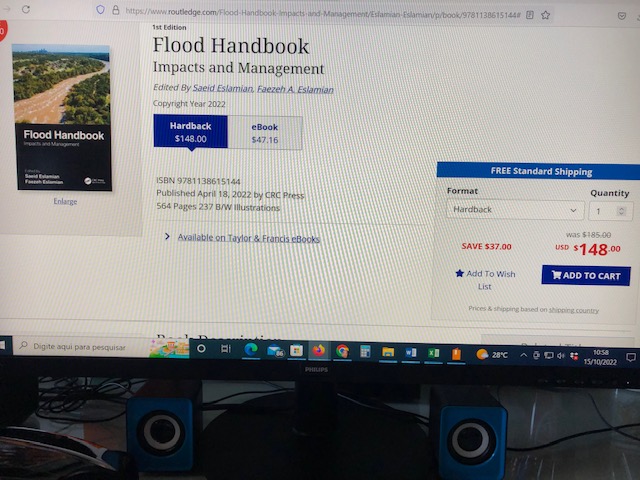
** Flood Handbook: Impacts and Management
Book Description
Floods are difficult to prevent but can be managed in order to reduce their environmental, social, cultural, and economic impacts. Flooding poses a serious threat to life and property, and therefore it’s very important that flood risks be taken into account during any planning process. This handbook presents different aspects of flooding in the context of a changing climate and across various geographical locations. Written by experts from around the world, it examines flooding in various climates and landscapes, taking into account environmental, ecological, hydrological, and geomorphic factors, and considers urban, agriculture, rangeland, forest, coastal, and desert areas.
Features
- Presents the main principles and applications of the science of floods, including engineering and technology, natural science, as well as sociological implications.
- Examines flooding in various climates and diverse landscapes, taking into account environmental, ecological, hydrological, and geomorphic factors.
- Considers floods in urban, agriculture, rangeland, forest, coastal, and desert areas
- Covers flood control structures as well as preparedness and response methods.
- Written in a global context, by contributors from around the world.
Table of Contents
Part I: Flood and Sustainability
- Sustainability in Flood Management-Fernando Alcoforado
- Hydrological Resilience of Large Lakes Management-Mike Ahmadi
- Best Management Practices as an Alternative for Food Control
Part II: Flood Impact Analysis
- Flood Management: Status, Causes and Impact of Land Use on Flood in Brahmaputra
- Impact of Urbanization on Flooding
- Impact of Infiltration on Volume and Peak of Flood-Saeid Eslamian
- Impact of Bed Form on River Flow Resistance-Saeid Okhravi
- Catchment Morphometric Characteristics Impact on Floods Management: Role of Geospatial Technology
Part III: Flood Risk Management
- Floods: From Risk to Opportunity-Iftekhar Ahmed
- Flood Risk Management in Romania- Daniel Diaconu
- Importance of Risk Mapping in the Processes of Spatial Planning in Spain-Jorge Olcina Cantos
- Reducing Flood Risk in Spain: The Role of Spatial planning, Alvaro-Francisco Morote Seguido
- Integrated Coastal Flood Risk Analysis-Andreas Burzel-Andreas.Burzel@deltares.nl-Dilani Dassanayake
- River Rehabilitation For Flood Protection-Tomasz Walczykiewicz
- Torrential and Flash Flood Warning: General Overview and Uses of Localized Hydropower-Spyros Schismenos
Part IV: Flood Hazard and Damages
- Flood and Building Damages-Mousa Maleki
- Flood Mapping, Monitoring and Damage Assessment using Geospatial Technology-Vaibhav Garg
- Fundamental Issues of Flood Hazard In the Alluvial Fan Environment-Jonathan Fuller
- Physical Vulnerability, Flood Damage, and Adjustments Examining the Factors affecting damage to Residential Buildings in Eastern
Dhaka-Md Nawrose Fatemi
Part V: Flood Erosion and Sediment
- River Flood Erosion and Land Development and Management-Giovanni Barrocu
- Debris and Solid Waste in Flood Plain Management-Sama Al-Jubouri
- A Sedimentary Investigation into Origin and Composition of a Dam Reservoir-Hallouz Faiza
- Sedimentation and Geomorphological Changes during Floods: Selected Problems-Leszek Starkel
Part VI: Flooding and Dam Construction
- Dam Failure Assessment for Sustainable Flood Retention Basins-MIklas Scholz
- Simulating Flood due to Dam Break-Zafer Bozkuş
- Modelling the Propagation of the Submersion wave in Case of a Dam Break-BouhellalaKharfia
- River Restoration as Flood Impact Mitigation-Osvaldo Rezende
To purchase the book, access the website https://www.routledge.com/Flood-Handbook-Impacts-and-Management/Eslamian-Eslamian/p/book/9781138615144#

 Site Title