Fernando Alcoforado*
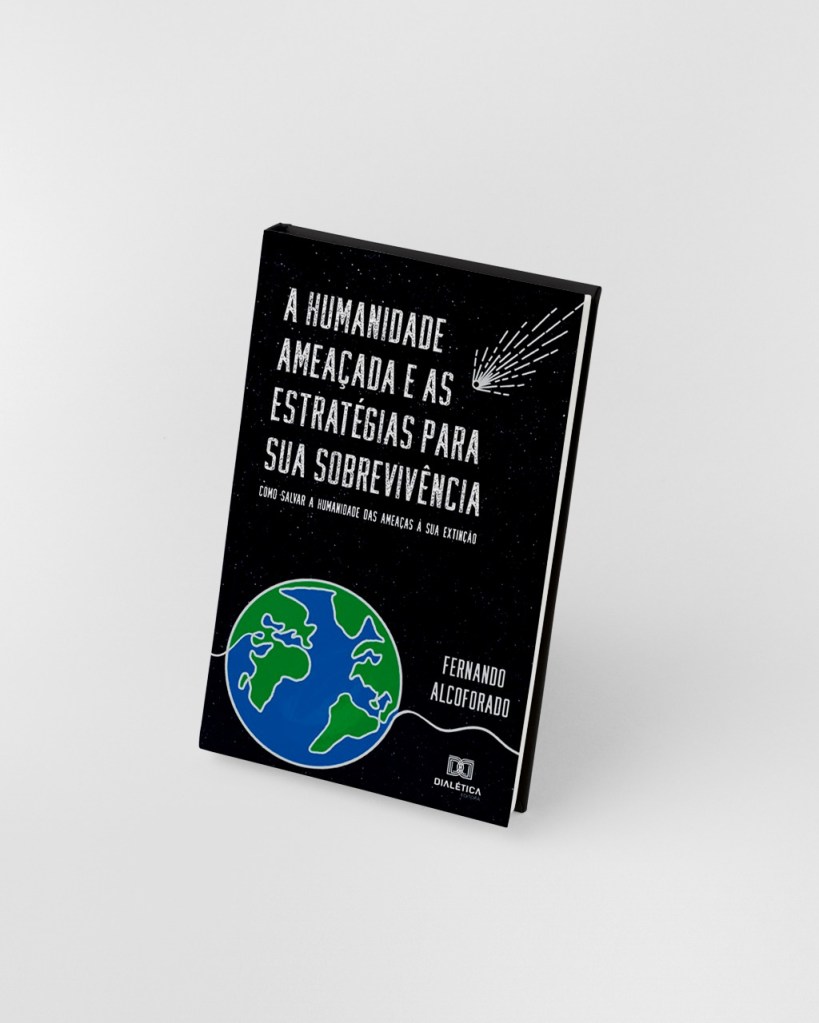
This article aims to present our book The threatened humanity and the strategies for its survival, which is subtitled How to save humanity from the threats to its extinction, which informs what the threats to the survival of humanity are and proposes strategies that aim overcome them. This article only deals with the threats that hover against humanity in the short, medium and long term. The strategies will be dealt with in another article to be published. Threats to humanity’s survival are countless. These threats are those situated inside planet Earth and coming from outer space. The threats existing inside planet Earth are those caused by human beings themselves, such as pandemics, the outbreak of a new world war with the use of nuclear weapons and catastrophic global climate change, and those caused by planet Earth itself with earthquakes, eruption of volcanoes and tsunamis. Threats from outer space are related to the collision on planet Earth of asteroids, comets and comet pieces, solar system planets and orphan planets, the continuing distancing of the Moon from Earth, the emission of cosmic rays, the end of the Sun, the collision of the Andromeda and the Milky Way galaxies and the end of the Universe.
In the book A humanidade ameaçada e as estratégias para sua sobrevivência (The threatened humanity and the strategies for its survival), each of the current and future threats against humanity’s survival described above is analyzed and strategies are proposed that contribute to their neutralization or overcoming. The first 8 chapters of this book analyze all the threats described above against humanity and then outline the strategies necessary for their survival. Chapter 9 highlights the fundamental strategies to be adopted regarding the imperative of scientific and technological advancement, increasing the biological capacity of human beings and the constitution of a world government, without which there will be no success in the effort to save humanity from threats to their survival, and Chapter 10 summarizes the conclusions of this book. In the following paragraphs, the great threats to the survival of humanity, dealt with in the first 8 chapters of the aforementioned book, are presented.
In Chapter 1 (How to save humanity from future pandemics), the biggest pandemics throughout history were analyzed, such as the bubonic plague (1333), cholera (1817), tuberculosis (1850), smallpox (1896), influenza Spanish (1918), HIV (1980), H1N1 Swine Flu (2009) and Coronavirus (2019) and their consequences, as well as the causes of pandemics were pointed out and necessary strategies to avoid them in the future were presented. The greatest threats to the survival of humanity are related to new pandemics that can lead to the extinction of the human species which, to be avoided, requires the adoption of 8 strategies whose purpose is to prevent the occurrence of new pandemics in the world which are presented in detail in the book.
In Chapter 2 (How to save humanity from social, economic, environmental devastation and wars in the 21st century), the economic, social and environmental damage produced by capitalism, the consequences of the end of capitalism in the mid-21st century, the worsening of conflicts in international relations, which may lead the world to face a multiplicity of localized wars and even a new world war in the 21st century, made it possible to outline the necessary strategies to face these devastating crises that threaten the future of humanity. The great threats to the survival of humanity are related to the worsening of the social conditions of the world population with the economic crises cascading until the end of capitalism in the mid-21st century, extinction of the human species with the outbreak of a new world war with the use of nuclear weapons among the belligerents and the extinction of the human species as an advance in the degradation of the world environment and in the catastrophic global climate change that, to be avoided, it is necessary to adopt 5 strategies whose purpose is to order the environment and the global economy in new ways and secure world peace which are presented in detail in the book.
In Chapter 3 (How to save humanity from natural disasters caused by earthquakes, tsunamis and volcano eruptions), the causes of earthquakes, tsunamis and volcano eruptions resulting from the movement of tectonic plates, which have contributed to the occurrence of deaths, were analyzed populations and destruction of buildings and infrastructure in many countries, and the experience gained in dealing with these catastrophic events in the past to present strategies for their prevention, as well as those necessary to save humanity by promoting the flight of human beings to habitable places in the solar system if it’s necessary. The greatest threats to the survival of humanity are related to the movement of tectonic plates that contribute to the occurrence of catastrophic events such as the death of large numbers of people and the destruction of buildings and infrastructure located close to the origin of earthquakes, to tsunamis caused by earthquakes in the sea and by the eruption of oceanic volcanoes that can lead to the death of large numbers of people and volcanoes that can lead to the extinction of species and life on the planet depending on the scale of their eruption, such as the great volcanoes that occurred 250 million ago of years that ended a life cycle on Earth that, to be avoided, it is necessary to adopt 8 strategies whose purpose is to adopt preventive and precautionary measures to deal with earthquakes and to monitor tsunamis and volcanoes to evacuate populations from critical areas which are presented in detail in the book.
In Chapter 4 (How to Save Humanity from Collision on Planet Earth from Bodies from Outer Space), celestial bodies such as asteroids, comets or pieces of comets, solar system planets, and orphan planets that roam in outer space that threaten to collide with the Earth were analyzed in order to present strategies to be adopted to avoid their collision with the Earth and, also, to save humanity by promoting the flight of human beings to habitable places in the solar system, if necessary. The collision with planet Earth of these celestial bodies has the potential to annihilate humanity and all living beings completely. The greatest threats to the survival of humanity are related to the extinction of the human species with the impact on planet Earth of asteroids, comets or comet pieces, solar system planets and orphan planets that roam in outer space that, in order to be avoided, are necessary the adoption of 9 strategies which are presented in detail in the book.
In Chapter 5 (How to save humanity from the emission of cosmic rays), the various sources of cosmic ray emission were analyzed, especially the gamma rays emitted by supernova stars, which have the power to annihilate life on Earth, radiation and Coronal mass of the Sun and cosmic rays to assess their consequences on humans on Earth and in space travel and propose the adoption of strategies aimed at protecting humans and alternatives for human beings to escape to habitable places in the solar system to save humanity if necessary. The greatest threats to humanity’s survival concern the powerful cosmic radiation resulting from the explosion of supernovae that emit gamma rays and can devastate life on Earth if the rays go their way, the cosmic radiation that hits the Earth from the Sun and the rays cosmic that can represent an immense danger to the health of human beings in space travel that, to be avoided, it is necessary to adopt 5 strategies which are presented in detail in the book.
In Chapter 6 (How to Save Humanity from the Consequences of the Moon’s Continued Distance from Earth), the impacts on Earth’s climate and human beings of the catastrophic environmental consequences related to the Moon’s continued distancing from Earth were analyzed, as well as alternatives for the escape of human beings to habitable places in the solar system, if necessary, were studied. As the Earth and the Moon are united by a strong gravitational bond and affect each other, the distance of the Moon from the Earth will impact human beings and the planet’s climate in a catastrophic manner that will require the adoption of relevant strategies to save humanity. The greatest threats to the survival of humanity are related to drastic and global climate changes resulting from the disappearance of the tides and the destabilization of the Earth’s axis of rotation and the end of many species and terrestrial plants that would occur with the continuous distancing of the Moon, which would also affect life on Earth that, to be avoided, it is necessary to adopt 5 strategies which are presented in detail in the book.
In Chapter 7 (How to save humanity from the death of the Sun and the collision of the Andromeda and the Milky Way galaxies), the evolution of the Sun until its end and the collision of the Andromeda and the Milky Way galaxies were analyzed and the alternatives for the escape of the humans to habitable locations in other star systems and galaxies were studied to formulate human escape strategies to save humanity before the death of the Sun and the collision of the Andromeda and Milky Way galaxies. The greatest threats to humanity’s survival concern the death of the Sun which, when it becomes a red giant, the Sun’s diameter on its equator will grow to the point where it surpasses the planet Mars, consuming all the rocky planets: Mercury, Venus , Earth and Mars and this will be, in fact, the end of planet Earth that will disappear completely in about 1 billion years and the collision of the Milky Way and Andromeda galaxies that will happen in approximately four billion years when the Earth will certainly feel its impacts that can be negative for humanity. The death of the Sun will require, as a strategy to save humanity, her to head to another planetary system in the Milky Way and the collision of galaxies will require her to head to a closer galaxy. To deal with this problem, it is necessary to adopt 5 strategies which are presented in detail in the book.
In Chapter 8 (How to save humanity with the end of the Universe), scenarios related to the fate of the Universe, the possibility of the existence of parallel universes and the development of the final theory or theory of everything, that is, from the unified field theory to present possible strategies for humanity to seek its survival with the end of the Universe in which we live. The greatest threats to humanity’s survival concern the end of the Universe we live in, the lack of proof of the existence of parallel universes to enable human beings to escape before the end of the Universe we live in, and the incipient development of the theory of unified field that is seen by physicists as the main theory that can explain the entire Universe and collaborate in the salvation of humanity with the end of the Universe in which we live. To deal with this problem, it is necessary to adopt 5 strategies which are presented in detail in the book.
It should be noted that a vast literature was consulted to identify threats to the survival of humanity, whether those resulting from political, economic, social, environmental and international relations problems caused by human beings in their activities, or by natural disasters caused by planet Earth, and also, by threats from outer space. Strategies to deal with each of the threats and the fundamental ones that contemplate scientific and technological advancement, the increase in the biological capacity of human beings and the constitution of a world government to deal with all the threats dealt with in the 8 chapters will be covered in part 2 of this article.
To readers who wish to purchase the book in Portuguese A humanidade ameaçada e as estratégias para sua sobrevivência (The threatened humanity and the strategies for its survival) from Editora Dialetica, access the following website:
* Fernando Alcoforado, 81, awarded the medal of Engineering Merit of the CONFEA / CREA System, member of the Bahia Academy of Education, engineer and doctor in Territorial Planning and Regional Development by the University of Barcelona, university professor and consultant in the areas of strategic planning, business planning, regional planning and planning of energy systems, is author of the books Globalização (Editora Nobel, São Paulo, 1997), De Collor a FHC- O Brasil e a Nova (Des)ordem Mundial (Editora Nobel, São Paulo, 1998), Um Projeto para o Brasil (Editora Nobel, São Paulo, 2000), Os condicionantes do desenvolvimento do Estado da Bahia (Tese de doutorado. Universidade de Barcelona,http://www.tesisenred.net/handle/10803/1944, 2003), Globalização e Desenvolvimento (Editora Nobel, São Paulo, 2006), Bahia- Desenvolvimento do Século XVI ao Século XX e Objetivos Estratégicos na Era Contemporânea (EGBA, Salvador, 2008), The Necessary Conditions of the Economic and Social Development- The Case of the State of Bahia (VDM Verlag Dr. Müller Aktiengesellschaft & Co. KG, Saarbrücken, Germany, 2010), Aquecimento Global e Catástrofe Planetária (Viena- Editora e Gráfica, Santa Cruz do Rio Pardo, São Paulo, 2010), Amazônia Sustentável- Para o progresso do Brasil e combate ao aquecimento global (Viena- Editora e Gráfica, Santa Cruz do Rio Pardo, São Paulo, 2011), Os Fatores Condicionantes do Desenvolvimento Econômico e Social (Editora CRV, Curitiba, 2012), Energia no Mundo e no Brasil- Energia e Mudança Climática Catastrófica no Século XXI (Editora CRV, Curitiba, 2015), As Grandes Revoluções Científicas, Econômicas e Sociais que Mudaram o Mundo (Editora CRV, Curitiba, 2016), A Invenção de um novo Brasil (Editora CRV, Curitiba, 2017), Esquerda x Direita e a sua convergência (Associação Baiana de Imprensa, Salvador, 2018), Como inventar o futuro para mudar o mundo (Editora CRV, Curitiba, 2019) and A humanidade ameaçada e as estratégias para sua sobrevivência (Editora Dialética, São Paulo, 2021).

 Site Title